14
Factories deployed
8+
Countries
200
Formal jobs created
1,000
Tons diverted
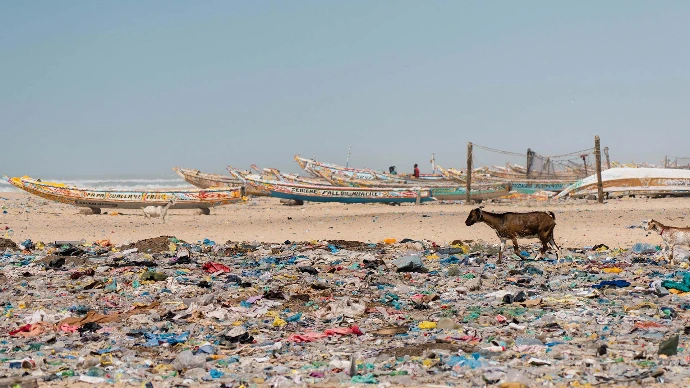
Reduction is the priority!
We consider mechanical recycling a form of intermediate storage: transforming dispersed plastic into massive, long-lived products that don't fragment into microplastics for decades, are far more accessible to future depolymerization technologies than sachets in a river delta, and substitute virgin materials in the meantime. Waste-to-Product is the bridge between today's reality and tomorrow's destruction technologies.
For the full evidence base: why reduction alone is insufficient, why mechanical recycling in developing countries is is a rational response, and what safeguards we apply. Click here
Built to last. Built to scale.
Cost-effective
We track $/ton diverted, $/job created, % field ratio. The goal: most impact per dollar invested in plastic diversion.
Profitability makes impact last and scale
No grant dependency. Each factory generates measurable outcomes through its commercial activity. Profitable before subsidies. That's the precondition for scale.
Built with local actors
15 million waste pickers are the backbone of recycling in emerging markets. We structure the chain around them: fair prices, social protection.
Traced from day one
Blockchain app, geolocated collection. QR codes at each stage. Certificate per batch. MRV-ready for audits, Plastic Certificates for corporates.
Four dimensions. One standard.
A factory that diverts plastic but goes bankrupt in year two hasn't solved anything. Measured and validated through our Impact Lab, ensuring consistent, field-based and auditable data across all factories.
1
Business
Cash flow positive Year 1. Premium vs. commodity through traceability.
2
Social
Jobs created & formalized. Gender/youth ratios. Safety (TRIR).
3
Environment
Tons diverted. CO2eq avoided. Energy/water intensity.
4
Resilience
Low subsidy dependency. Revenue diversification. Economic multiplier.
What we don't know yet?
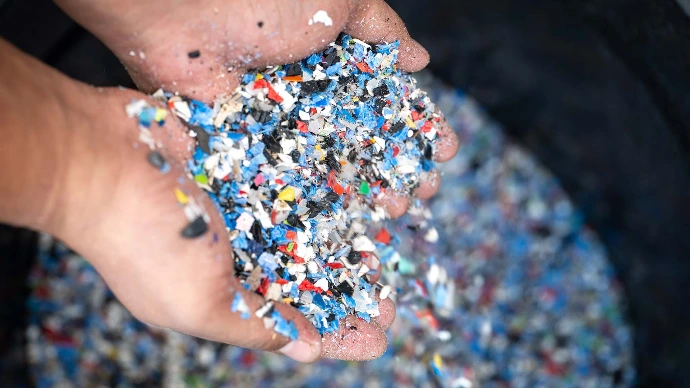
Mechanical recycling postpones the problem. It can significantly reduce oxidation and microplastic release compared to wild burning or leaving a sachet on the beach, but quantifying these effects long-term remains an open scientific question. Results depend heavily on input plastic types (non-repeatable) and the products manufactured.
Recycled plastics accumulate chemical residues: inherited additives, contaminants absorbed during use, and new compounds formed during processing (over 16,000 chemicals identified in plastics, 4,200 hazardous, with each recycling cycle increasing polymer porosity and migration risk). We exclude food-contact and are launching standardized testing (TCLP, VOC) to quantify leaching from our products.
We know factories impact communities beyond direct employees. Rigorous quantification is work in progress.
Do our recycled products actually replace existing worse solution? We need better market data to compare actual scenarios.
Our ~1 tCO2/tonne figure is a generic estimate. Detailed LCA with ImpactLab in progress. Factory-specific data expected 2027.
For the full evidence base: why reduction alone is insufficient, why mechanical recycling in developing countries is a rational response, and what safeguards we apply. Click here
Our Endowment Fund builds local capacity.

Our endowment fund Plastic Odyssey Academy receives 10% of PO Factories profits.
- Education: Waste sorting in schools. Community sensitization. Building the culture that makes recycling last.
- Youth pathways: Operator training. Entrepreneurship tracks to factory ownership.
- Open knowledge: 100+ recycling centers documented. Technical docs shared freely. Scaling matters more than IP.