
Recycling plastic creates up to 13 times more jobs than producing virgin plastic—a ratio documented by Plastic Odyssey Factories based on its field experience in emerging countries. Transforming the Senegalese plastics industry requires more than just machines; it requires skills. Two concrete initiatives have just been launched: a FabLab installed at the École Polytechnique de Thiès (EPT) to train the sector's engineers, and an agreement signed with the CNQP and the Institut Joliba to certify field technicians.
An Established Sector with a Skills Gap
Senegal already has a plastics industry. Local companies transform, mold, and produce. What they lack are the technical skills needed to integrate more recycled plastic into their processes. As a result, recycled material remains underutilized, plastic pollution persists, and a major economic lever remains untapped.
This is the bottleneck that Plastic Odyssey Factories aims to remove—not by training for the sake of training, but by training to ensure workforce integration and employment.
EPT FabLab: From Raw Material to Finished Product
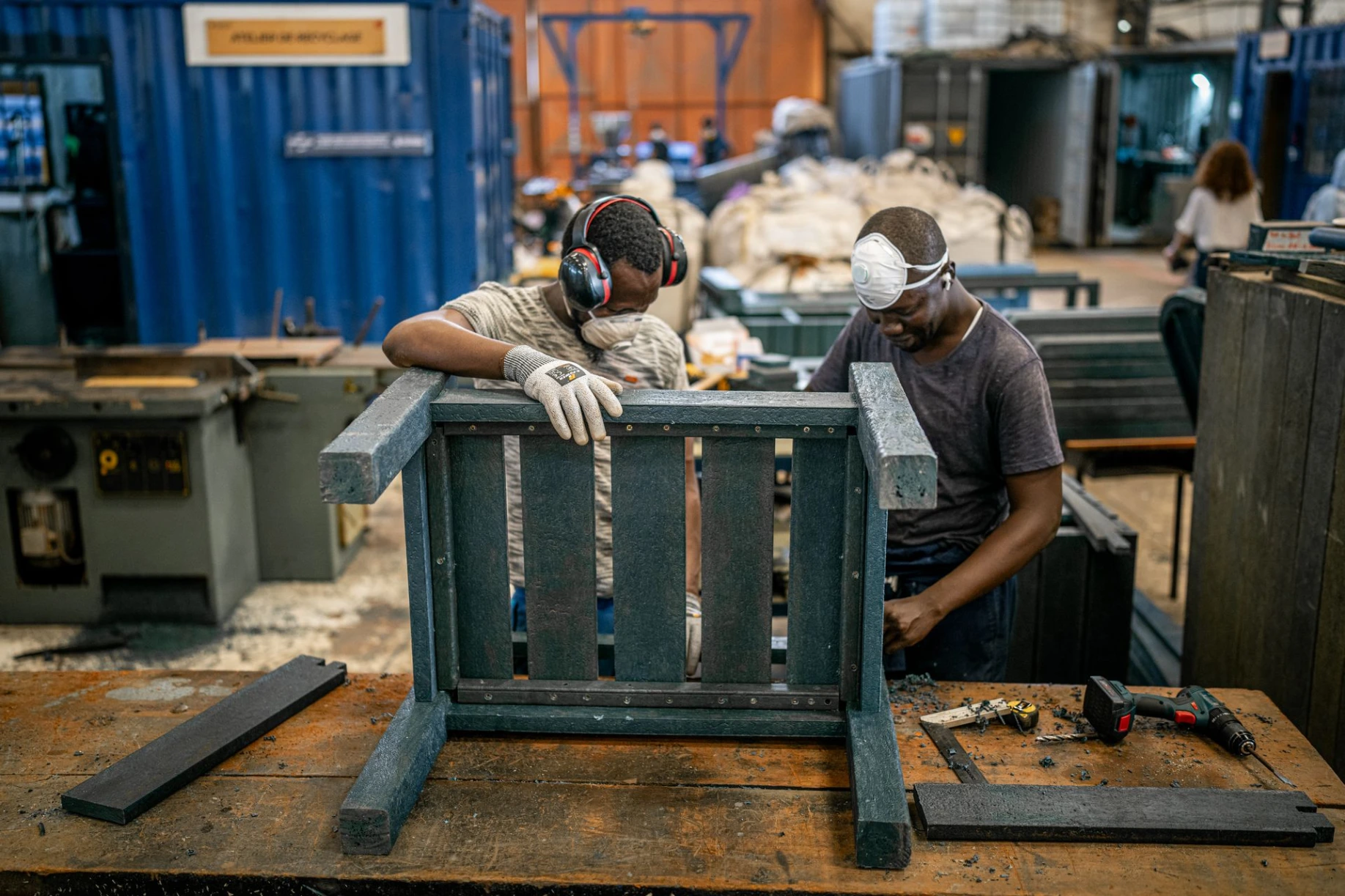
In December 2025, Plastic Odyssey Factories set up a FabLab dedicated to plastic recycling at the École Polytechnique de Thiès (EPT). The facility covers the entire value chain: two shipping containers equipped with a shredder (150 to 250 kg/h), an extruder, and a plastic carpentry workshop, all powered by solar panels. From sorting to the finished product—boards, profiles, and furniture—engineering students work with real materials using actual production machines.
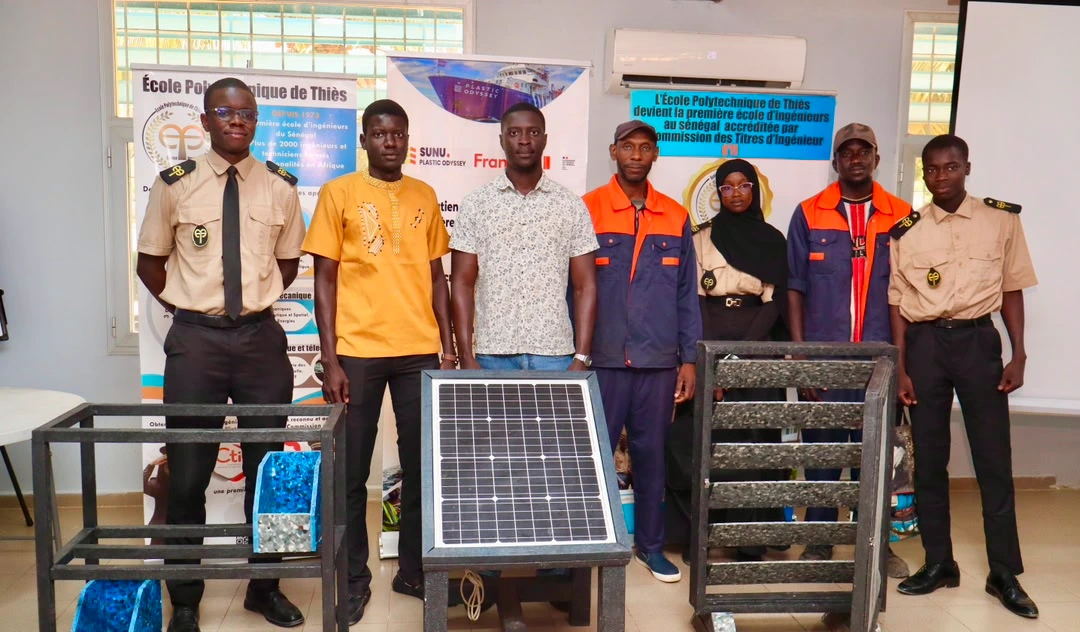
This is the first academic platform dedicated to plastic transformation innovation in Senegal. The ultimate goal is to establish a junior enterprise backed by the EPT, capable of designing and commercializing solutions derived from local recycling.
Since the installation, Plastic Odyssey Factories has organized two hackathons with EPT students. The first centered around a challenge issued by the COJOJ: designing sports equipment from recycled plastic for the Dakar 2026 Youth Olympic Games. The second focused entirely on the FabLab, featuring prototypes pitched to a jury, including sunshade windows, solar panel mounts, and modular furniture.

Certification with the CNQP and Institut Joliba
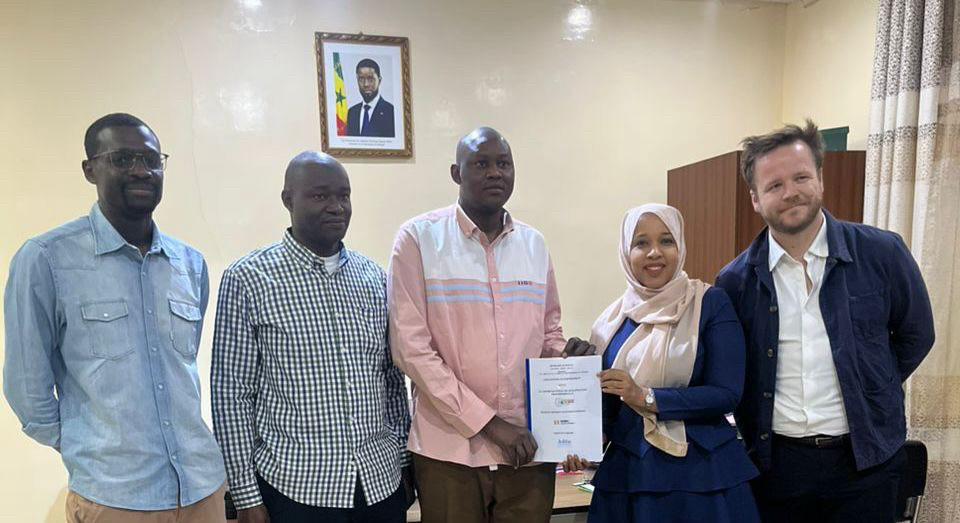
On May 21, 2026, Plastic Odyssey Factories Senegal signed a partnership agreement with the National Center for Professional Qualifications (CNQP), represented by its Director General, Mr. Bassirou Diouf, and the Institut Joliba, represented by its President, Dr. Mariam Aidara Ba.
The Institut Joliba serves as Plastic Odyssey's operational field partner in Senegal, overseeing training coordination, instructional design, and on-the-ground deployment. The CNQP, a body under the Ministry of Employment, Vocational Training and Crafts, provides the official certification.
In practical terms, this partnership will make it possible to:
- Certify training modules for recycling professions (sorting, extrusion, maintenance, and material preparation)
- Issue joint CNQP – Joliba – Plastic Odyssey certificates and credentials to beneficiaries
- Organize short pilot sessions (2 to 5 days) culminating in recognized certifications
- Promote these training programs to youth, job seekers, and industry professionals
Plastic Odyssey Factories is providing an educational curriculum comprising 94 chapters organized into 11 modules, supplemented by videos, case studies, and end-of-course certifications.
Training, Integrating, Employing
The two frameworks are highly complementary:
- EPT + FabLab: Targeting engineers and innovators—the future executives and entrepreneurs of the sector
- CNQP + Institut Joliba: Targeting field technicians (vocational and technical diploma levels) and recycling plant operators
The underlying logic is clear: training that does not lead to employment has no impact. Likewise, a prototype that does not become a product creates no value. Each educational pathway is designed to directly supply the Senegalese plastics industry workforce and sustainably reduce plastic pollution through economic leverage.