
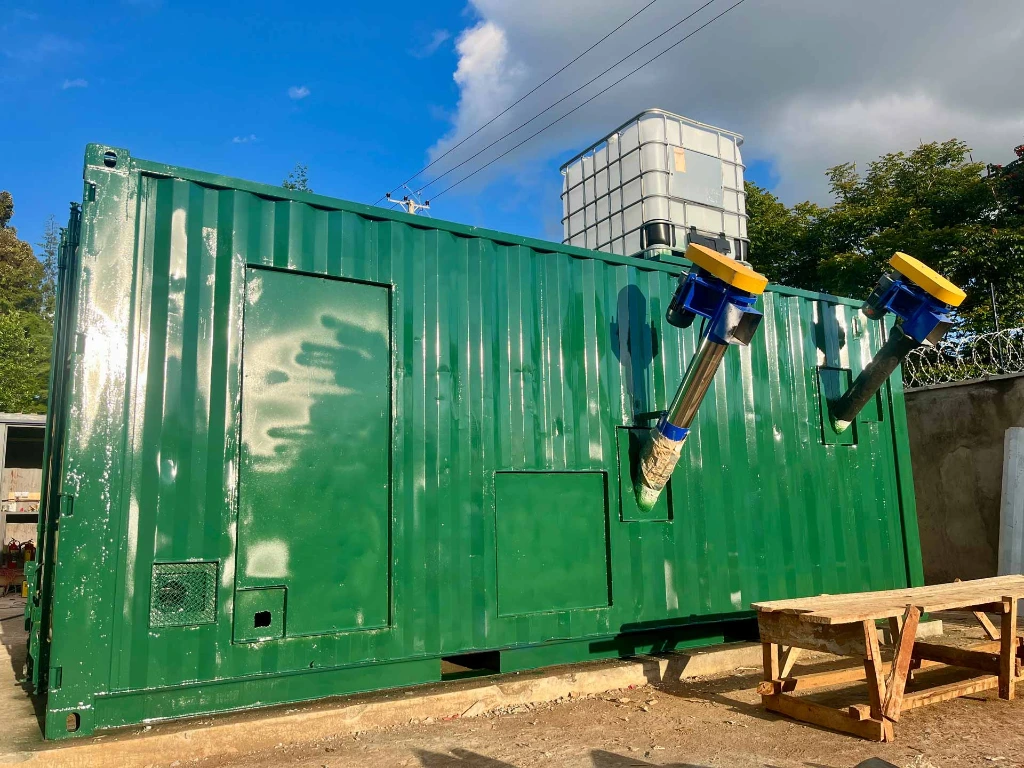
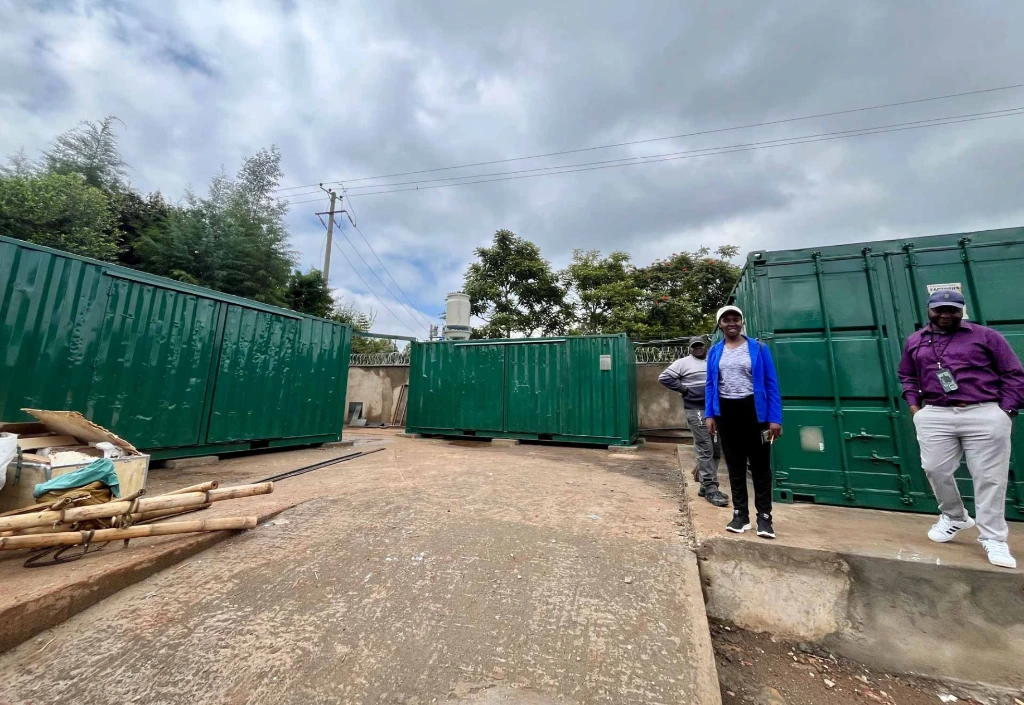
Nairobi, Kenya. On the outskirts of the Kenyan capital, a site is now home to a complete plastic recycling micro-factory and a training center. After Djibouti, this is Plastic Odyssey Factories' (POF) second foothold in East Africa, led with two partners: Women's Earth Alliance (WEA), an American NGO, and Back to Basics, a Kenyan collective founded by Aisha Karanja that champions the creation of economic activity and the empowerment of women, particularly in underserved areas.
One center, two functions
The site was designed as a "resilience center": on one side the micro-factory, on the other a training center. The goal isn't only to transform plastic, but to train cohorts of women from the community in the recycling value chain, before gradually scaling the model up nationwide.
On the industrial side, the unit covers the entire processing chain: collection and densification (shredding, washing), then extrusion and molding to produce boards, profiles and a range of finished products in recycled plastic through plastic woodworking. Back to Basics, already experienced in artisanal upcycling, takes charge of the micro-factory's day-to-day operation, supported and trained by Plastic Odyssey Factories (POF).
An L'Oréal / WEA partnership, a replicable model
Following a feasibility study in 2025, the project was approved by Women's Earth Alliance and its partner L'Oréal, with a clear objective: create tangible economic opportunities for women in the community while fighting plastic pollution. After an initial installation phase in early 2026, the BTB team and a first cohort of women are on the verge of being trained in operations and maintenance. Next comes a ramp-up phase, with management gradually handed over to the local Back to Basics team by the end of 2026.
A gateway to East Africa
Beyond the unit itself, this project marks a strategic milestone for POF: it is the network's first site in Kenya, in a region with strong potential that has so far seen little coverage. It paves the way for further partnerships in the area, following a model already proven elsewhere on the continent: machines, training, and local community roots.