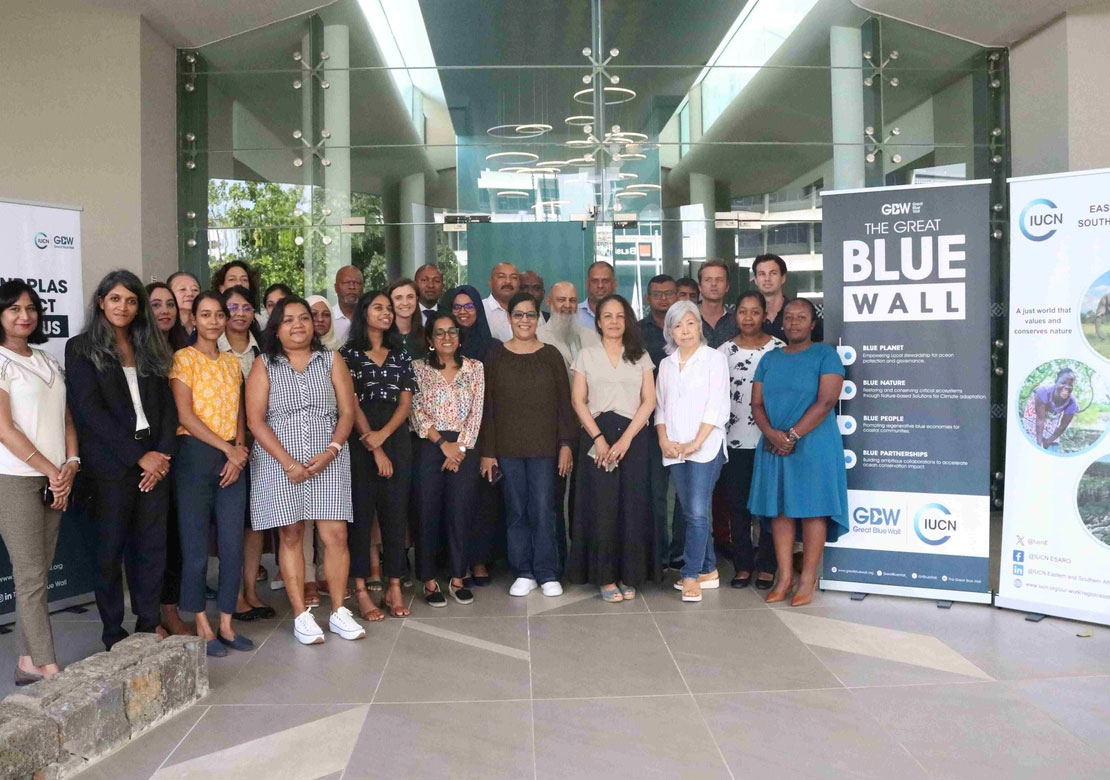
Rodrigues, Comoros, Madagascar, Seychelles. Four island territories, four local entrepreneurs, one shared diagnosis: plastic is piling up, collection is fragmented, and local processing doesn't yet exist at scale. Plastic Odyssey Factories is launching a major initiative under the IUCN's Island Plas project (International Union for Conservation of Nature), with four projects running in parallel across the Indian Ocean.
The bet: cover the entire value chain, not just the machine
The classic mistake in this kind of project is to install a machine while ignoring what happens upstream and downstream. No structured collection, no feedstock. No feedstock, no viable plant. And conversely, no market outlets, no economic viability and therefore no recycling. Through its local partners, Plastic Odyssey Factories is helping build all four projects around a full value-chain approach, notably by bringing informal waste collectors on board from the outset as economic stakeholders in their own right.
This stance is non-negotiable: on the islands of the Indian Ocean, the plastic that ends up in landfill or at sea has often already been sorted, transported and pre-sold by independent pickers whose work is neither recognized nor fairly paid. The Island Plas projects treat paying for collection as a condition of the business model's sustainability, not as a social add-on.
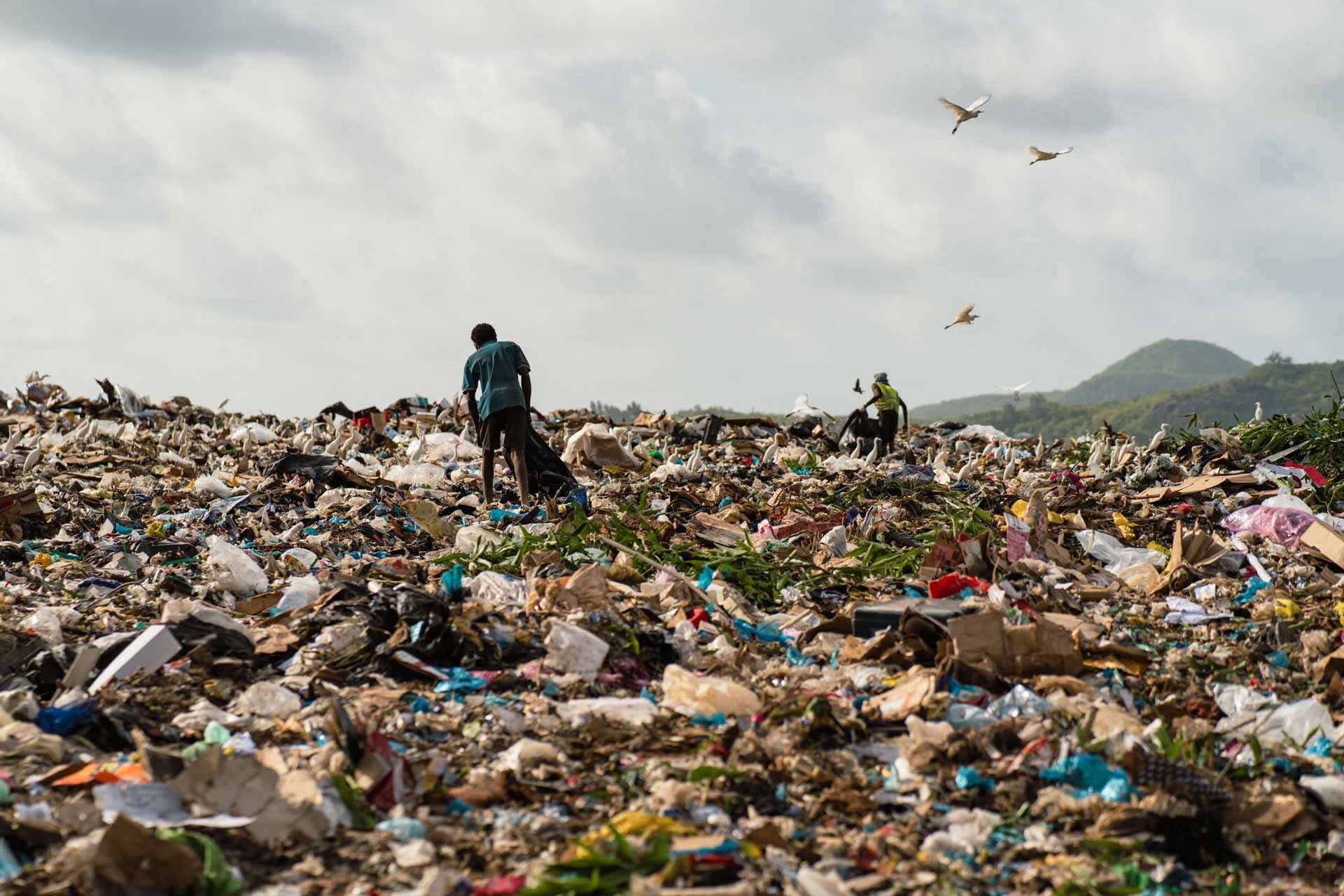
Providence landfill in Victoria, Seychelles
Each of the four national partnerships is the result of a collaboration going back several years, built on trust and a shared ambition to set up projects that actually work. Working across four territories at once naturally allows resources and lessons to be shared, and adapted tools for traceability, training and awareness-raising to be developed jointly.
Rodrigues - Mautopia: transforming an island that's already primed
Rodrigues is the most advanced case in terms of collection infrastructure. For more than ten years, RodClean has operated separated collection points. As of January 2026, sorting waste at source is mandatory for every household. The feedstock is there. The micro-factory led by Mautopia aims to close the loop: locally transforming what is already being collected, and creating economic outlets on the island itself. Part of the stream will be shipped to industrial players in Mauritius (PET bottles, clean HDPE, etc.) under a reverse-logistics agreement, while the remaining PE/PP mix and flexible plastics will be turned into boards and profiles on-site in Rodrigues — notably to support infrastructure development (public procurement, tourism, etc.).
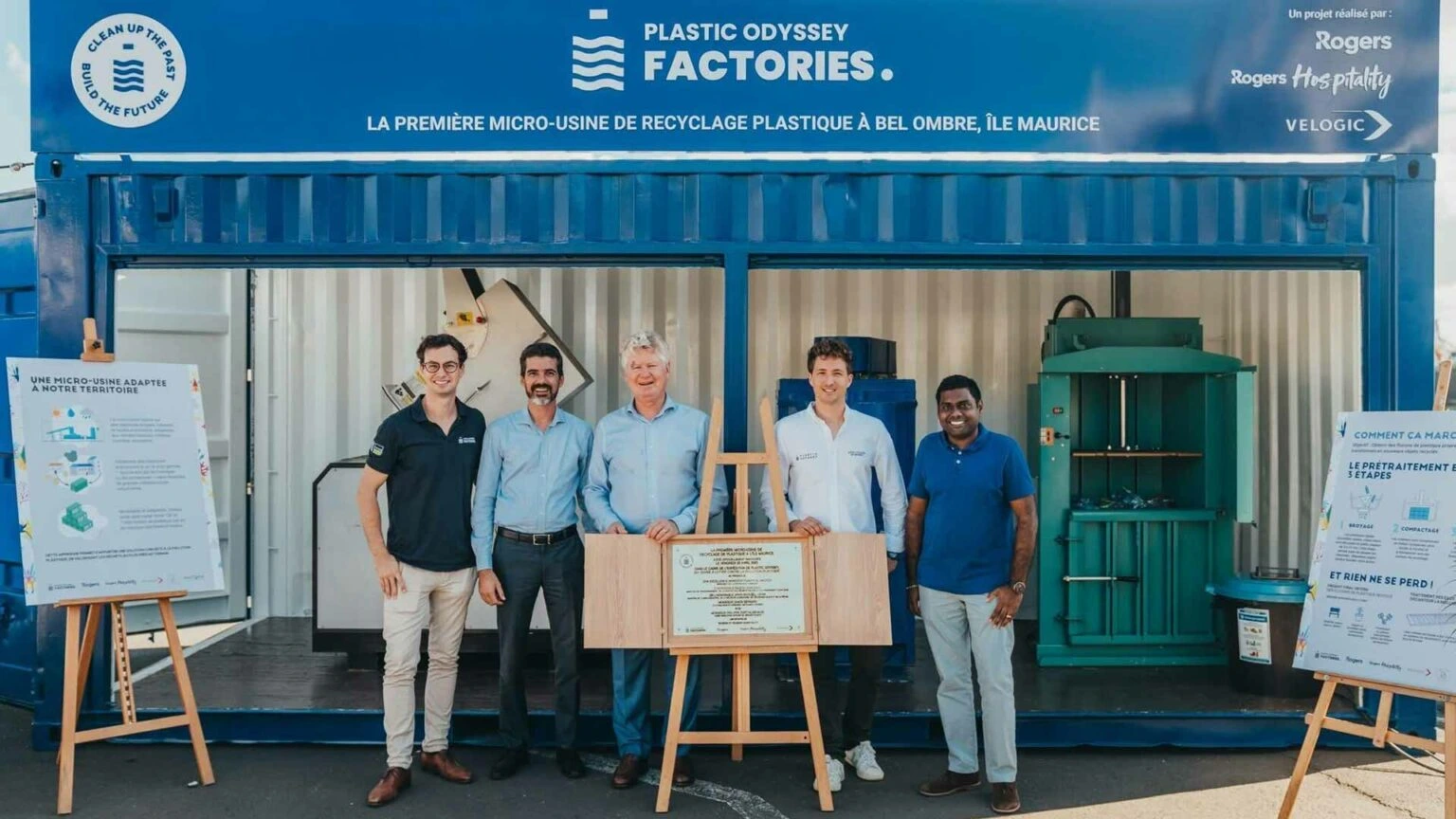
Following the first micro-factory set up with the ER Group in southern Mauritius thanks to Mautopia's support, a new unit is now planned for Rodrigues
Comoros - Nassim Ali, Recyvie, with the NGO 2Mains: three islands, one logistical challenge
The Comorian project is the most complex in this consortium. Nassim Ali, founder of Recyvie, leads a project that initially covered Mitsamiouli in the north of Grande Comore and was recently extended to the capital, Moroni. The Island Plas project, however, is more ambitious and targets Grande Comore, Anjouan and Mohéli simultaneously: three islands with different realities, different players and uncertain maritime links. This calls for working with partners established on the two other islands. The local NGO 2Mains provides community roots and works directly with collectors on the ground.
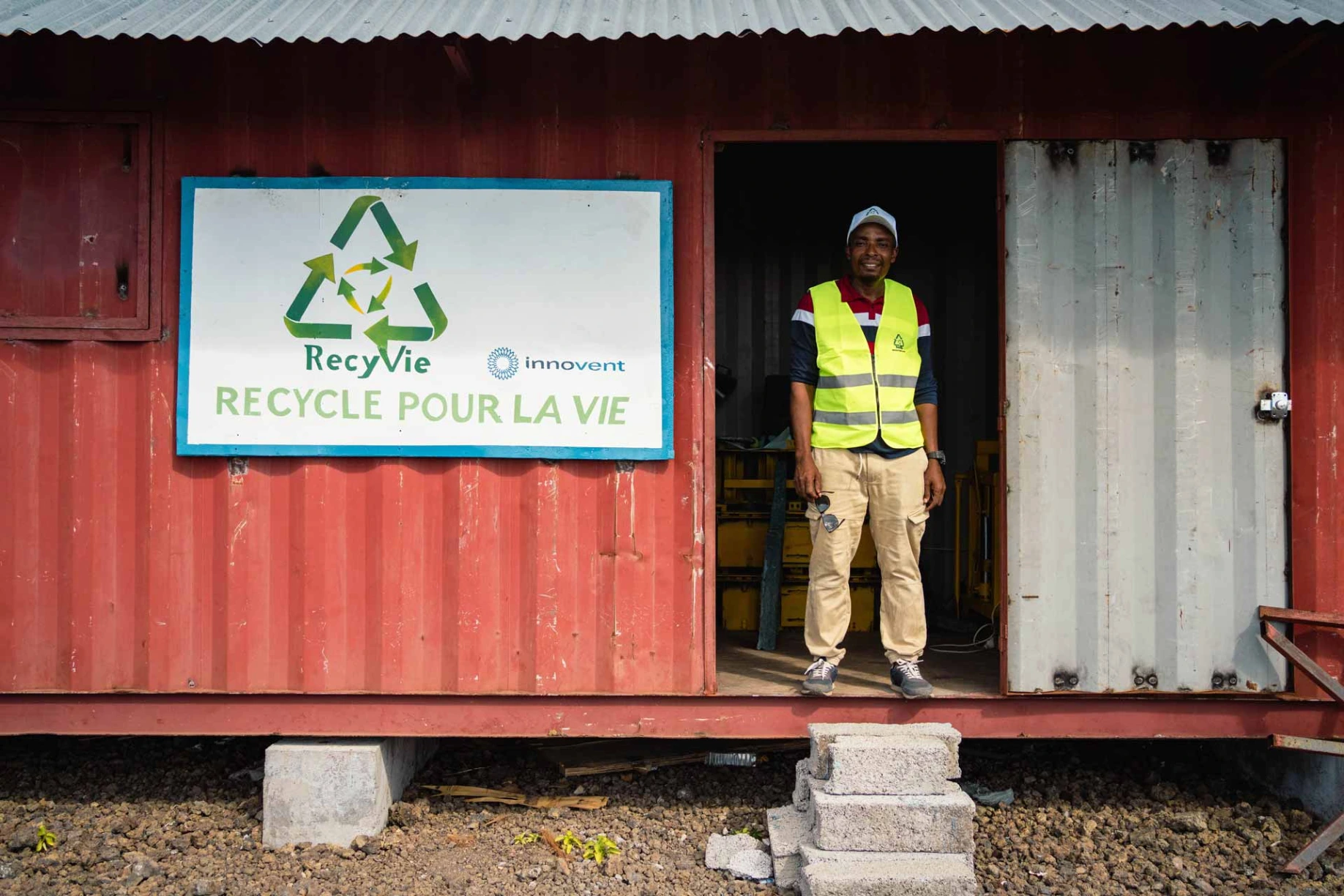
Nassim, founder of Recyvie in the Comoros
Madagascar - STCV: a dual chain, two markets
In Antananarivo, Gaëlle and Johan Pless run STCV, a small business that already collects plastic waste, cardboard and more from commercial clients. The Island Plas project enables STCV to move beyond B2B collection to also gather waste through communities and the informal sector, and to add a processing chain built on a dual-market approach. The first planned outlet: turning common plastics (HDPE, PP) into boards and furniture, as well as paving for the construction and development sector. The second outlet (historically already in operation): high-value plastics (PE, industrial-grade PET) resold to local plastics manufacturers looking for a supply of recycled material to cut both their costs and their footprint. This twin outlet makes the business model more resilient: if one market slows, the other absorbs the slack.
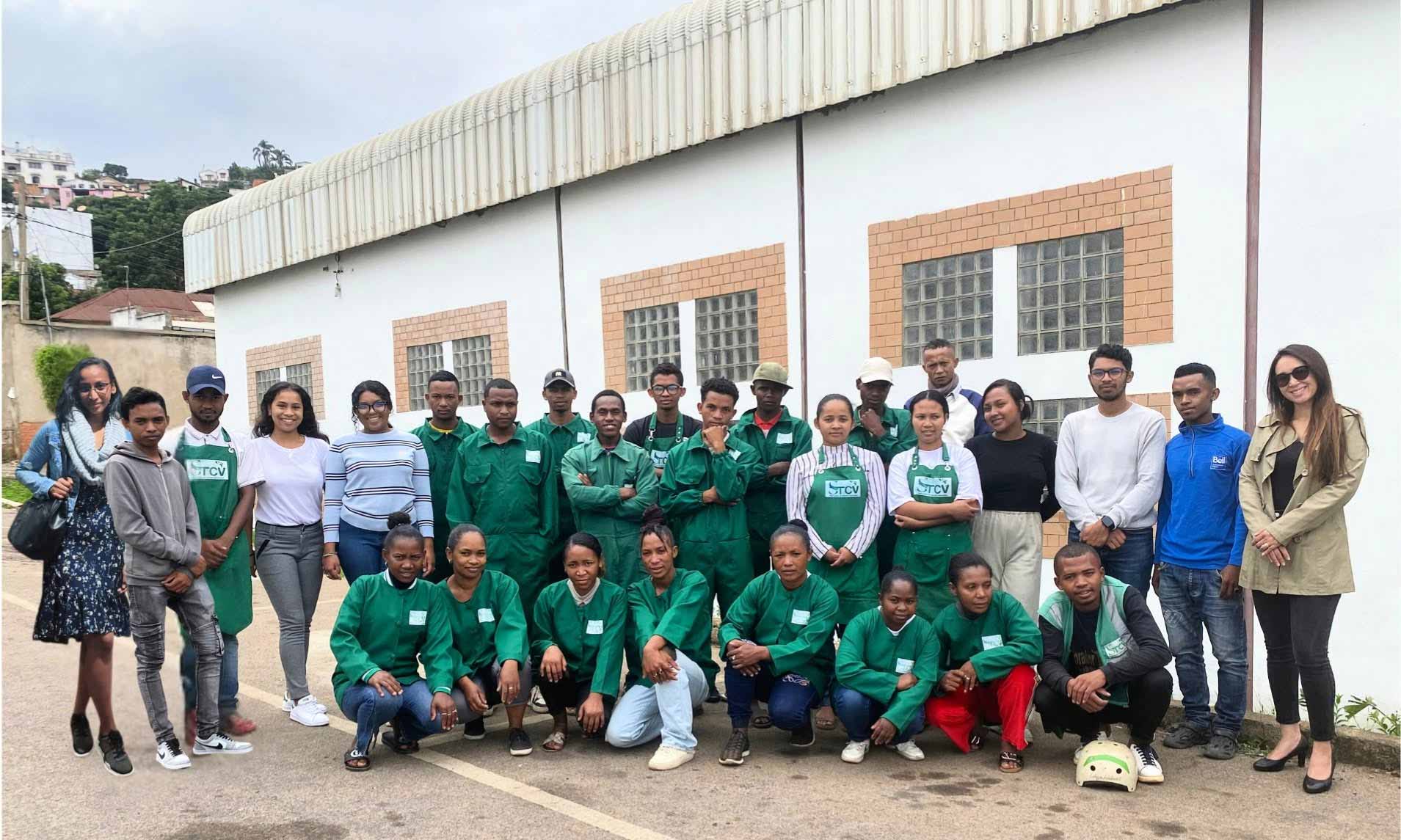
The STCV team
Seychelles - Kyle de Bouter, Brikole Pty: extrusion first, collection to be built
Kyle de Bouter leads the Seychelles project with a technical focus on plastic extrusion. The technology is well in hand. The real challenge, identified from the start: Seychelles does not yet have a structured collection system operating at the scale needed to reliably feed a plastics processing unit. Brikole Pty is therefore working in parallel to build the upstream chain: raising awareness among stakeholders, identifying and paying informal collectors, creating drop-off points, and setting up steady material flows. The downstream side, of course, also has to be built in the specific context of Seychelles, a country heavily geared toward tourism but also fishing.
This case illustrates a reality that Plastic Odyssey Factories documents across all its sites: the machine does not make the value chain. Collection is sometimes the hardest bottleneck to solve, and the most decisive for long-term viability.
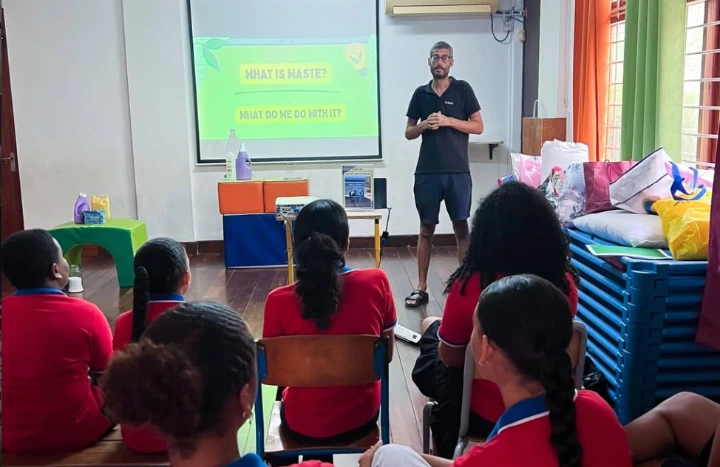
Kyle running a workshop in a school to raise awareness about collection
A shared vision for the Indian Ocean, carried by favorable timing
The four projects are moving forward together, not in isolated parallel. Plastic Odyssey Factories acts as an integrator: capturing lessons from the field, transferring methodology, and providing technical support on machines and processes. This consortium model, blending local and international expertise, also makes it possible to pool learnings, avoid mistakes, and share training tools and best practices. Finally, it gives the projects collective weight in discussions with regional institutions, the Indian Ocean Commission (IOC), and funders such as the French Development Agency (AFD) and UNDP, with its ISLANDS project in the region.
The goal isn't simply to prove that recycling is possible on an island. It's to prove that it is replicable and viable under the specific conditions of small island developing states, with their logistical constraints, their fabric of local entrepreneurs, and their reliance on informal collection networks.
See you before the end of 2026, when these four recycling factories should be up and running on the ground!